
If you’ve started researching bathroom renovation costs in Melbourne, you’ve probably already noticed how much the numbers vary. One website says $10,000. Another says $45,000. Someone on a forum says their cousin did it for $6,000. And now you’re more confused than when you started.
Here’s the truth: bathroom renovations in Melbourne genuinely do vary that much — and there are real reasons for it. The difference between a $12,000 job and a $35,000 job isn’t a contractor ripping you off. It’s the size of the room, whether the plumbing moves, the tiles you choose, the fixtures you select, and how much of the existing structure needs to come out before anything new goes in.
This guide breaks it all down honestly. We’ll walk you through what things actually cost in Melbourne in 2026, what drives the price up or down, and what you should realistically budget depending on what you’re trying to achieve.
Before we get into the detail, here’s the big picture:
Renovation Type | Typical Cost Range |
Cosmetic refresh (no layout changes) | $8,000 – $15,000 |
Full mid-range renovation | $15,000 – $35,000 |
Premium or large bathroom | $35,000 – $55,000+ |
Most Melbourne homeowners doing a full renovation on a standard main bathroom end up somewhere between $20,000 and $35,000. That’s a full strip-out, new waterproofing, new tiles, new fixtures, updated plumbing, and a fresh result from top to bottom.
If you’re just refreshing a functional bathroom — new vanity, new tapware, a fresh coat of paint, maybe retiling the shower — you can do it for considerably less, often in the $8,000 to $15,000 range.
And if you’re going full luxury — large format stone tiles, custom joinery, freestanding bath, heated floors — budget $40,000 and up.
One thing worth knowing upfront is that bathroom renovations in Melbourne cost more than in most other Australian cities. Melbourne labour costs run 10 to 20% above cities like Brisbane or Adelaide. There are a few reasons for this.
First, licensed trades are in high demand and command accordingly strong rates. In Melbourne, plumbers charge $100 to $150 per hour, electricians charge $90 to $130 per hour, and tilers charge $60 to $100 per hour. These aren’t optional costs you can skip — a compliant bathroom renovation in Victoria requires licensed plumbers, licensed electricians, and certified waterproofing.
Second, Victoria has strict compliance standards. Waterproofing must meet Australian Standard AS 3740. Plumbing and electrical work must be carried out by licensed tradespeople who issue certificates of compliance. A compliant bathroom renovation in Victoria generally requires the coordination of six to eight different specialised trades — demolition, plumbing, electrical, waterproofing, tiling, plastering, and painting. Coordinating all of those under a single renovation company adds efficiency, but there’s an inherent cost to doing it properly.
Third, older Melbourne homes — particularly the brick veneers, weatherboards, and period homes that make up a huge portion of the housing stock across suburbs like Point Cook, Werribee, Footscray, Coburg, and similar areas — often have surprises behind the walls. Asbestos, old galvanised pipes, non-standard drainage, deteriorating subfloor. Issues like asbestos removal, which can cost $5,000 or more, or unexpected plumbing problems can inflate your budget significantly. This is why experienced renovators always recommend building a 10 to 15% contingency into your budget before you start.
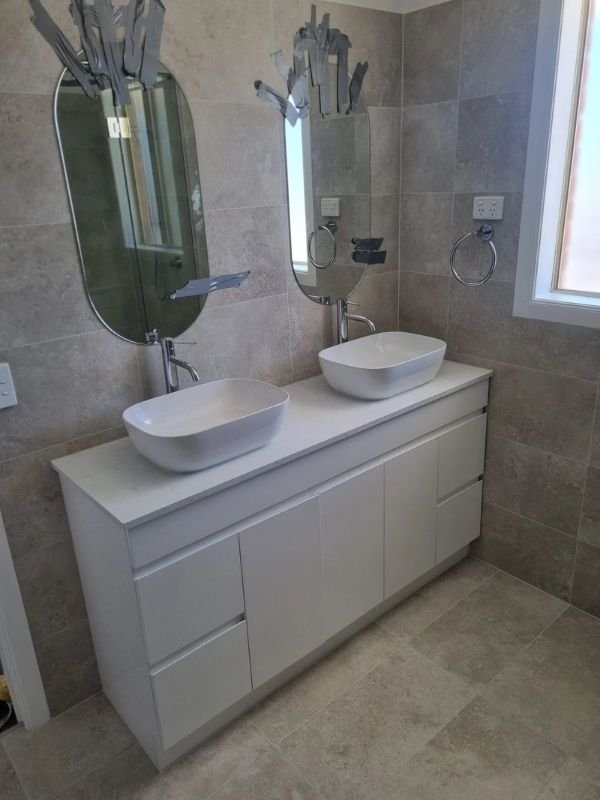
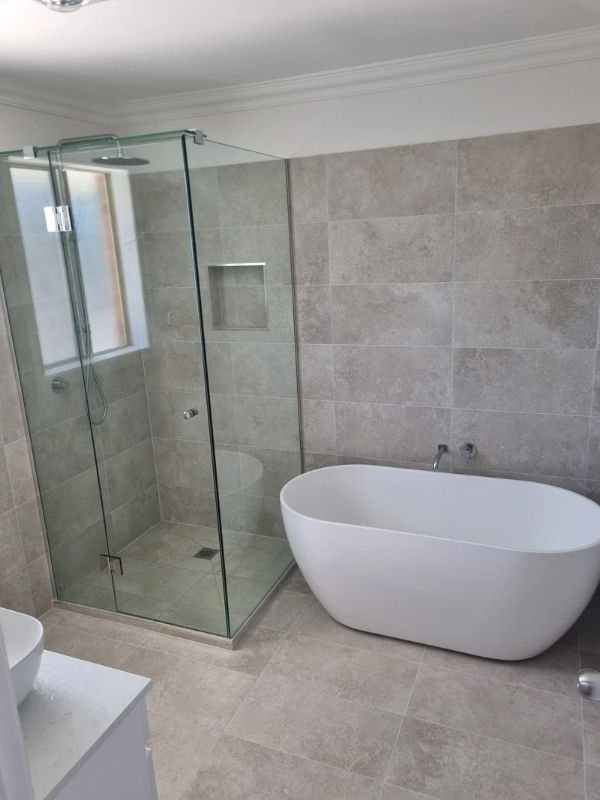
This is the right approach when your bathroom is structurally sound and functional, but tired looking. The layout stays the same. The plumbing stays where it is. You’re improving the surface — not rebuilding.
What this typically includes:
What it doesn’t include:
Many Melbourne homeowners keep bathroom renovation costs between $10,000 and $15,000 by avoiding plumbing relocations and selecting standard fixtures. This tier works well for investment properties, secondary bathrooms, or homeowners updating a bathroom that works fine but looks ten years out of date.
This is the most common type of bathroom renovation we see at Renovation Pro across Melbourne. It’s a full strip-out and rebuild — everything comes out, new waterproofing goes in, and the bathroom is rebuilt from scratch with quality finishes.
What this typically includes:
This is the renovation that transforms how a bathroom looks and feels. It’s a proper rebuild, not a patch-up. Done well, a mid-range bathroom renovation in Melbourne adds genuine property value and gives you a bathroom you’ll be happy with for fifteen years or more.
Premium bathroom renovations are characterised by size, complexity, or the quality of materials used — often all three.
A premium bathroom renovation in Melbourne typically falls between $36,750 and $57,750, and can go significantly higher for very large bathrooms, luxury master ensuite projects, or custom designs with imported tiles, bespoke joinery, or freestanding baths.
What pushes a renovation into premium territory:
If you’re in a suburb where homes sell above $1.2 million and you’re renovating a master ensuite, spending $45,000 to $55,000 on a bathroom is a legitimate investment. The finish level needs to match the property and what buyers in that suburb expect to see.
Understanding what drives bathroom renovation costs helps you make smarter decisions about where to spend and where to pull back.
This is the single biggest variable in any bathroom quote. Keeping your toilet, shower, and vanity in exactly the same positions as they are now keeps plumbing costs to a minimum — typically $1,500 to $2,500 for rough-in and fit-off. Moving a toilet, adding a second basin, or relocating the shower pushes plumbing costs to $4,000 to $6,000 or more. If your current layout works reasonably well, keeping it in place is one of the most effective ways to control your renovation budget.
Tiles are one of the areas where costs vary most widely and homeowners have the most control. Budget-friendly ceramic tiles might cost $30 per square metre, while premium Italian porcelain from specialty Melbourne suppliers can exceed $200 per square metre.
Beyond the tile price itself, the installation cost varies too. Standard tiles laid in a straightforward pattern are the most economical. Large-format slabs require more skill and time to cut and lay. Herringbone, chevron, or other feature patterns cost more in labour regardless of what the tile costs.
A practical approach: spend on tiles in the areas you see most — the feature wall in the shower, the floor — and be more economical on the less visible surfaces.
Waterproofing typically costs between $500 and $900 for an average-sized bathroom. In the context of a $20,000 renovation, that’s a small percentage — but it’s genuinely the most important money you’ll spend.
Failed waterproofing causes structural damage that is vastly more expensive to fix than getting it right the first time. A bathroom that leaks behind the tiles causes timber subfloor rot, damage to ceilings below, and potentially mould throughout the wall structure. The repair bill is usually four to five times what proper waterproofing would have cost.
A basic vanity unit costs $500 to $1,200, but a custom timber vanity with stone benchtop easily reaches $3,000 to $6,000. A standard close-coupled toilet costs $300 to $600, while a wall-hung toilet with in-wall cistern costs $1,200 to $2,500 including installation.
Fixtures are an area where you can influence your budget significantly. Mid-range tapware from reputable Australian brands like Caroma or Methven looks good, performs well, and is supported locally. You don’t need to spend $1,500 on a tap to get a great result — but going too cheap on tapware usually costs more long-term because it needs replacing faster.
Inner-city suburbs like South Yarra, Richmond, Carlton, and St Kilda often attract higher labour and access-related costs compared to outer suburbs. This is due to parking restrictions, access limitations, and generally higher trade rates closer to the CBD.
In Melbourne’s western suburbs — Point Cook, Werribee, Hoppers Crossing, Tarneit — and south-east — Berwick, Cranbourne, Narre Warren — trade access is generally easier and costs tend to track the lower-to-mid end of Melbourne pricing ranges.
Most Melbourne bathroom renovation projects run anywhere from two to six weeks, depending on the size of the space, the level of detail, and the availability of trades.
A cosmetic refresh with no structural changes can be completed in one to two weeks. A full mid-range renovation typically takes three to four weeks once trades are on site. Larger or more complex renovations — particularly those with custom joinery or material lead times — can run to five or six weeks.
The most common cause of delays isn’t the actual renovation work — it’s material delivery times, particularly for tiles ordered from interstate suppliers, and trade sequencing. A good renovation company coordinates the trade sequence so each one flows into the next without unnecessary downtime on your project.
Before signing any bathroom renovation contract in Melbourne, ask these questions:
Is waterproofing itemised separately, and who is doing it? It should be a licensed waterproofer, not a labourer. Ask for the membrane product being used.
Is the price fixed, or are there provisional sums? A fixed-price contract is your best protection against blowouts. Provisional sums are estimates for items not yet specified — they can and do increase.
What happens if there are hidden issues during strip-out? Old homes regularly reveal asbestos, rotten framing, or non-compliant old plumbing once demolition begins. Know how the company handles variations before you start.
Are all trades licensed and insured? Ask for VBA registration details for the plumber and electrician, and confirm the company holds public liability insurance.
What does the timeline look like, and how is site communication managed? A renovation company that can’t answer this clearly is one that hasn’t thought the project through properly.
If you’re renovating partly with resale in mind, the numbers are encouraging. Real estate data for 2026 suggests a well-executed bathroom renovation returns 60 to 80% of its cost in added property value. In Melbourne’s inner and middle-ring suburbs, a dated bathroom is consistently one of the top negotiating tools buyers use to push prices down — removing that negotiating tool at a cost of $20,000 to $30,000 is often worthwhile if you’re selling within the next few years.
At Renovation Pro, we handle bathroom renovations across all of Melbourne — from Point Cook and the western suburbs through to bayside, the inner city, northern, and eastern corridors. We’re upfront about costs from the first conversation, we coordinate all licensed trades, and we use proper waterproofing on every single project without exception.
If you’re thinking about a bathroom renovation and want to know what it’s realistically going to cost for your specific home and suburb, get in touch for a free consultation and quote. No vague estimates — just honest numbers based on what your project actually involves.
This guide reflects current Melbourne market pricing as of 2026. Costs are indicative ranges based on industry data and vary by project scope, bathroom size, finish level, suburb, and site conditions. All renovation work is carried out to Victorian building compliance standards. For permit requirements, refer to the Victorian Building and Plumbing Commission.